
Pet loss writing guide
Dog Obituary Examples for a Beloved Companion
Three dog obituary examples with editing notes for a public announcement, a family remembrance, or a rescue dog whose early history is unknown.
Original, human-edited memorial guidance reviewed against our privacy and grief-safety boundaries. It is not therapy, veterinary care, legal advice, or medical advice.
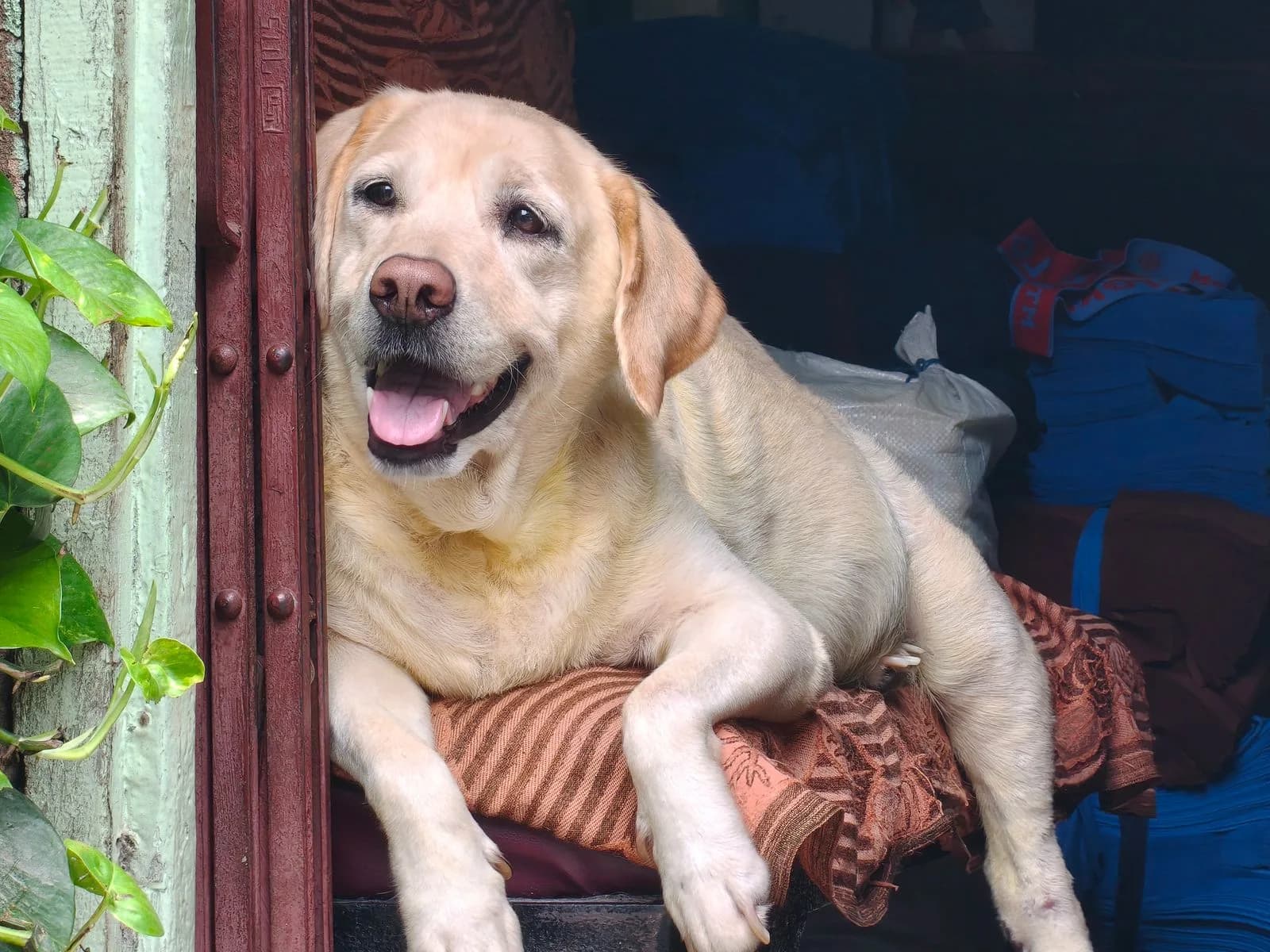
Reading a dog obituary example can help when you have memories but cannot find a first sentence. The useful part is seeing which details the writer chose and how much they left unsaid.
If you want a blank structure or a first draft, start with the dog obituary template and free helper. Here, we work through three different examples and show how to revise them in your own voice.
The dogs and stories below are fictional examples written for this guide, not customer memorials. Borrow an approach, then replace the details with memories that belong to your dog.
A short announcement for people who knew your dog
We said goodbye to Nell this week. Many of you knew her as the terrier who carried a fallen leaf home from every walk. We will miss finding those little collections beside the door. Thank you to everyone who stopped to greet her over the years. We are taking some quiet time together and may be slow to reply.
This announcement does three jobs: it shares the news, gives friends one recognizable memory, and explains what the family needs right now. It does not need an account of Nell's final days.
What to adapt: Choose a detail that the people reading might remember. It could be a greeting at the gate or a toy your dog always brought to visitors. Keep the last sentence only if you want to set that boundary; you do not owe anyone an explanation for being quiet.
What to leave out: A cause of death, exact age, or date is optional. Add it if you want it recorded, not because an obituary seems incomplete without it.
A longer remembrance for the family
Otis had a rule about breakfast: nobody sat down until he had inspected the kitchen. He would make one slow circuit of the table, settle beside the empty chair, and wait for the kettle to click off. On Sundays, that same inspection could take twice as long because everyone was home.
When we look through his photos, it is tempting to choose only the big days: his first trip to the beach, the snowy afternoon, the birthday with the crooked paper hat. But we want to remember those uneventful mornings too. Otis was there while we found our shoes, packed lunches, and talked about what the day might bring. We miss having him in the middle of it all.
The first paragraph stays inside one small scene. The second explains why that scene matters. This gives a longer piece somewhere to go without turning it into a list of every good quality Otis had.
What to adapt: Write down a routine in order, as though you were describing a short home video. What did your dog do first? What happened next? Then add one sentence about what you miss. You can stop there, even if the result is shorter than this example.
What to check: If you write “we,” let the other people included read it. A shared tribute can hold different memories without claiming that everyone feels exactly the same way.
Remembering a rescue dog with an unknown history
We do not know Ruby's birthday or much about her first years. We know that she joined our family in November, that she preferred the blue rug to every dog bed we bought, and that she eventually learned to nudge our hands when she wanted another scratch behind her ears. Our time together was shorter than we wanted. Ruby, we are grateful we got to know you, and we will remember the place you made for yourself here.
This version acknowledges a gap without filling it with an invented story. The known details are enough to make Ruby recognizable.
What to adapt: If your dog's age is uncertain, use the time you shared or the day they came home. You can describe a change you witnessed, such as a new routine, without guessing what happened before you met.
What to avoid: You do not have to turn the tribute into a rescue success story. A brief or complicated bond still deserves words that feel honest.
How to revise a sentence that feels too generic
A first draft might say:
She was an amazing dog who brought us endless joy.
Try replacing the broad description with something you could actually picture:
She brought her squeaky pear to the bathroom door every morning and waited while we brushed our teeth.
The second sentence does not need a more impressive adjective. It gives the reader a moment. If you want, follow it with the plain sentence “We miss that little interruption.”
Read your draft aloud. If a phrase sounds unlike you, use the words you would say to someone who knew your dog. If you are preparing something to read at a gathering, the dog eulogy guide can help you shape it for speaking.
Making a private version shorter for sharing
Start with the paragraph you want to keep for yourself. Mark the one memory you are comfortable sharing, then build the public version around it. Removing family names or details of the final days does not make the love less visible.
For a card with very little room, keep your dog's name, that one detail, and a closing sentence. See short pet loss quotes if you need help finding the closing words.
You can return to the dog obituary helper whenever you want a simple starting structure. If you later want to keep your words alongside photos and other memories, you can start a private PawsLullaby Memory when it feels right.